I Lost My Husband One Day After Our Anniversary

What Grief, Motherhood & Healing Taught Me About Surviving Loss
We promised to stay by each other’s side until our hair turned gray, but fate had other plans. In the blink of an eye, he was gone.
We started dating when I was 21, got married eight years later, and welcomed our baby boy a year after that. We were genuinely happy with the small family we were building together.
Everything seemed to be falling perfectly into place until I was struck by the most harrowing experience of my life. I lost him to a heart attack just one day after our fifth wedding anniversary.
It was extremely difficult to get back up after losing him. We shared so many dreams, especially for our son. The pain felt unbearable. It’s far beyond anything I could have imagined because I never pictured a life without him by my side.
I had grown so used to his presence, to having him there through every part of my day. We were together for years, and suddenly, he was no longer around. I was hurt not only because I lost him, but also because our son would grow up without a father.
My heart also broke for my husband, knowing he would never get to watch our son grow up or experience all the milestones and memories we once dreamed of sharing as a family.
Fast forward to today, and the pain is still here. I still cannot say that I have fully moved on because I think about him every single day. But little by little, I am learning to see the beauty of life again.
I know how difficult it is to lose someone you love, especially the person you promised to stand beside through thick and thin. If you’re carrying the same kind of grief, healing may feel impossible right now. It is not a quick or easy process.
But I hope this article becomes a small source of comfort and healing for both you and me. Perhaps writing this is part of my healing process, too. I hope these words remind you that you’re not alone.
The Shock of Losing Someone You Thought You’d Grow Old With

Losing a partner changes every part of your life: your routines, your future, even your sense of identity. It doesn’t feel real at first, especially because the loss was so sudden. It’s as if the world pauses. Everything around you continues moving, but you are frozen in disbelief.
I remember staring at the walls, at the couple mugs we used to drink coffee from every morning, at the empty space beside me, trying to make sense of what had just happened.
My mind refused to accept that someone who had been so alive, so present, could vanish in an instant. At forty-two, he was supposed to still have a good life ahead of him, the kind of life we dreamed of as a family.
The silence that greeted me every time I woke up was deafening, and I found myself replaying the moment over and over, hoping that somehow, I had misunderstood it or that it was just a nightmare. Only to realize it was my new reality.
In those first few days, numbness became my only form of survival. I moved through time without feeling it. I answered calls, signed papers, and comforted others, especially our five-year-old son who kept asking for him — all while my heart felt detached from my own body.
Every memory of him played like a film I couldn’t turn off. Our laughter, our plans and dreams, the way he looked at our son, the way he listened to me and treated me as his equal. I kept expecting him to walk through the door, send a message, or exist somewhere just beyond my reach.
The shock wasn’t just emotional. It was physical. It’s like my body was rejecting the truth. It came with a lingering disbelief, making my mind cling to memories as if they could undo what had happened.
I realized that this stage isn’t about acceptance. It’s about survival. It is my body’s way of cushioning the blow, offering time to breathe before the full weight of loss settles in.
Grief Doesn’t End After the Funeral
The funeral may mark the end of ceremonies, but it is never the end of grief. When the visitors leave and the house grows quiet, the silence becomes overwhelming. I remember lying in bed at night, staring at the empty space beside me, unable to sleep.
His belongings, a shirt draped over a chair, the tumbler and notepads on his desk, his slippers outside, even his towel, became painful reminders of what I had lost. Each item carried a memory. And each memory carried a wave of sorrow that felt impossible to escape.
Grief lingers in the smallest, most unexpected moments. A song on the radio, our favorite snack, or even a random phrase from someone can trigger tears. There were moments, like attending mass with my son or going out to eat, when grief would suddenly rise without warning and make me cry.
His memories are so vivid that I decided to move into a different place to take the first steps toward healing.
Watching Your Child Grieve While You’re Grieving Too
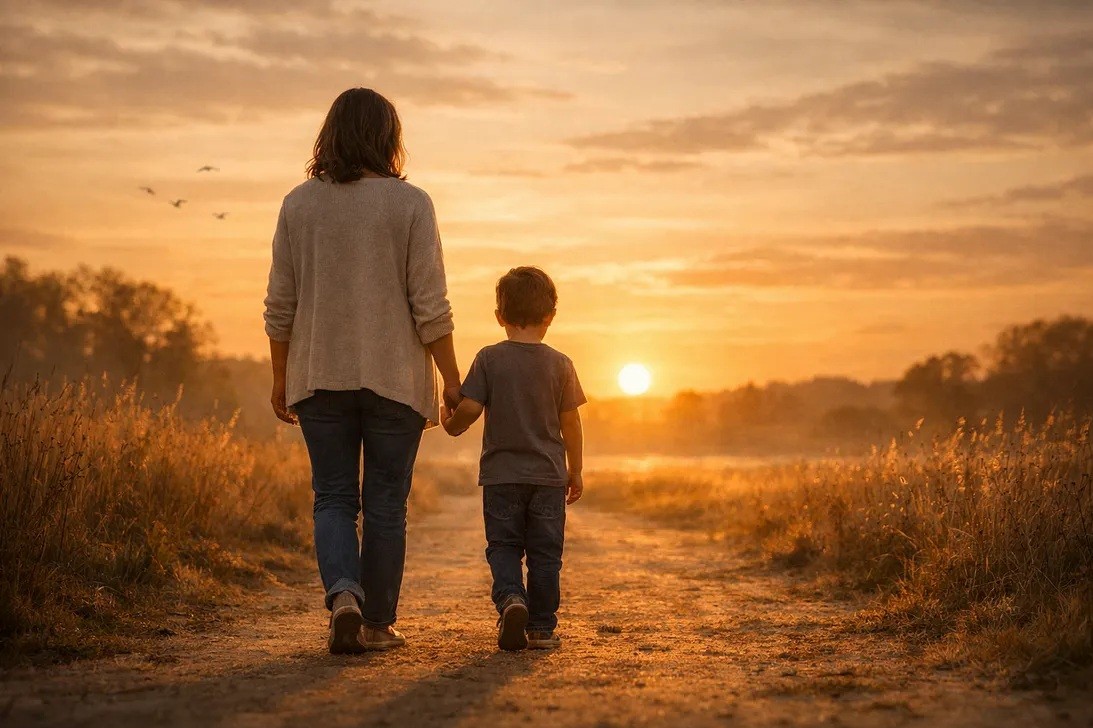
Perhaps the most heartbreaking part of loss is watching your child grieve while you are still drowning in your own pain. Explaining death to my son was one of the hardest things I have ever done.
His innocent questions, “Where is Daddy?” or “Will he come back?”, pierced through me in ways words cannot describe. I wanted to protect him from the truth, but I also knew I had to be honest. I couldn’t tell him his dad would come back because he won’t.
He misses their bonding moments. They laughed a lot, played hard, and shared so much joy. It is a difficult process explaining everything to him because I don’t want him to see my pain. I want to be his shield and rock, especially now that he no longer has his dad. I want to keep protecting him.
But every time he asks questions, sometimes so suddenly, it becomes a trigger that makes me want to break down. Still, I hold him close, answer with love, and show him that it is okay to cry when he misses him.
I don’t want him to erase the memories of his dad. I want him to remember how good his dad was, and that even without him, he is not lacking because the love he received from his father was unconditional and immeasurable.
The Pressure to Move On
Another hard part of grieving is the expectation that you will eventually “get over it”. People mean well, but their words often carry invisible pressure, as if healing should follow a timeline.
They stop checking in after a while, assuming you are “doing better”. What they don’t realize is that the loneliness only deepens. The world moves on while you remain in the same place, learning to live with an absence that feels louder than any presence.
Sometimes, I find myself pretending to be okay to ease their concern, even when inside, I am still breaking. I have learned that grief does not move in straight lines. It loops, stalls, and resurfaces when you least expect it. Even now, I think about him every day, and that does not mean I am stuck. It means love does not disappear with loss.
Grief is not something you simply move on from. It becomes part of you, woven into your days in ways others cannot always see. Some mornings I wake up stronger. Other mornings, I crumble. Healing is not about forgetting. It’s about learning to live with the memories, longing, and love that remains.
What Slowly Helped Me Breathe Again
What helped me was not a grand solution but small, quiet acts of survival. Writing became my outlet. It became a way to pour out the pain I could not say aloud. My son gave me purpose, a source of motivation and inspiration, reminding me that even in loss, life still needed me to show up.
Routine helped me find stability when everything felt uncertain. Prayer and my faith gave me strength when I felt too weak to stand on my own.
I also learned to stop fighting the bad days. Allowing myself to cry and feel the weight of grief was strangely freeing. Over time, I realized healing is not about erasing sorrow but about making space for both pain and joy to coexist.
With the support of loved ones and the acceptance that grief will always be part of me, I began to breathe again slowly but surely.
You Never Stop Loving Them: You Learn to Carry the Loss
Some days are still heavy. Some memories still break me unexpectedly. But little by little, I’m realizing that surviving grief does not mean forgetting the person you lost. It simply means learning how to carry their memory while continuing to live.
I’m still learning how to live with this, but I’ve also discovered that healing doesn’t always look like moving on. It doesn’t happen all at once, either. Sometimes, healing is simply about slowly returning to yourself.
And sometimes, it begins quietly, one breath, one morning, one small step at a time.
You May Also Enjoy:
 Dear Me: A Letter to Every Introvert | The Introverted Pen

Thankfulness in the Quiet Corners: An Introvert’s Gratitude

The Sanctuary Bath: A Quiet Evening Ritual for Mental Restoration | The Introverted Pen
A Note of Appreciation from the Writer
Continue the quiet journey!
Thank you for spending a little of your day here at The Introverted Pen! If this article resonated with you, you may also enjoy the printable planners, reflection tools, and paper goods from my little stationery shop, Wrapped Words & Prints.
Visit the shop here: