Beat Procrastination and Unleash Your Productivity: 10 Ways to Be a More Productive Remote Worker

Working remotely could mean freedom to work anytime and anywhere, but there’s a major downside: sometimes, you’ll be tempted to slack off.
With the fast-paced world we live in now and the many opportunities technological advancements have opened up to us, it’s now possible to choose between working in an office and working from home.
Of course, many want to choose the latter. It means freedom, right? By choosing a work-from-home setup, you can work at your own time, pace, and space. No need to worry about the daily commute or traffic. It’s unnecessary to clock in and out at the same time each day, too.
It’s like a dream for employees who no longer want to be confined to an office, work rigid hours, and deal with a toxic work environment. The good news is that remote job opportunities are always abundant. You can choose to be a virtual assistant, digital marketer, social media manager, graphic designer, or web content writer, among many others.
Depending on your skills, you can be what you want online plus you get the chance to work for people in different parts of the globe. You even get the chance to set your own price depending on how much you believe your skills and expertise are worth.
The Downside
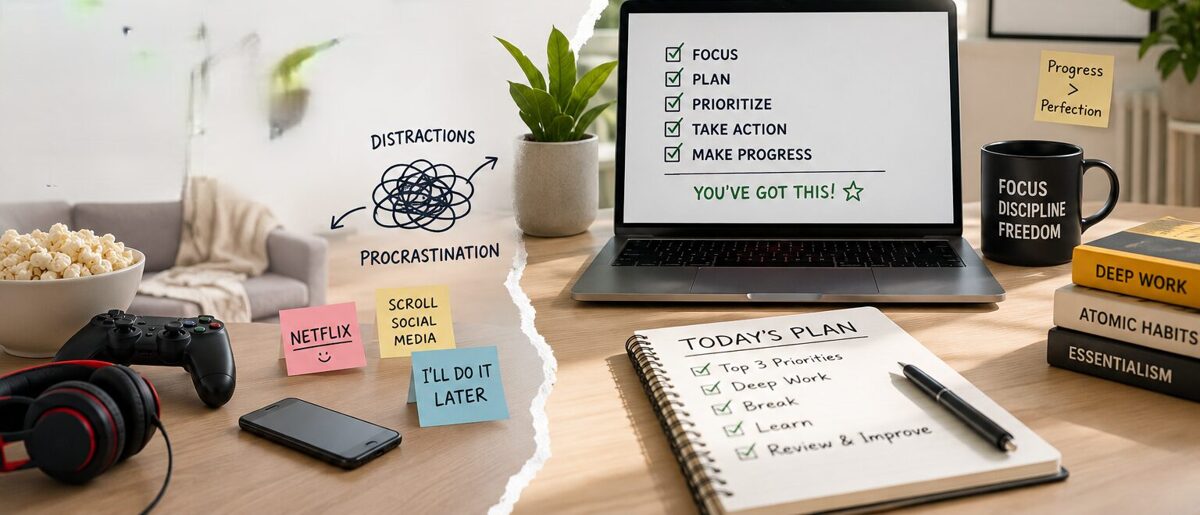
But did you know that working from home or remotely also has its own downsides? The most common is that you might procrastinate or slack off.
You may not realize that you’re already wasting your time on things that don’t help you reach your goal or target income since no one is physically present to supervise, monitor, or watch you. You may also get distracted by the noise around you, especially if you’re living with others.
How to Stay Productive While Working from Home?
If you’re one of those struggling with staying productive while working remotely, you don’t have to fret. There are ways to bring back and unleash your productivity.
Here, we’ll tackle the different ways remote workers can stay productive and get things done.
#1 - Reverse Your To-Do List

One of the most commonly used tools to stay productive is a to-do list. Of course, no one can deny how good and effective it is for staying organized, so I highly recommend using it to motivate yourself to accomplish both simple and complex tasks. However, there are also instances when the to-do list you created results in overwhelm and stress.
If that happens, you can reverse it. This means that instead of creating a list of tasks you have to finish, you should start listing your accomplishments for the day. It’s a good way to boost your mood and motivate you to do more since you can clearly see what you’ve accomplished.
#2 – Take a Nap
 You
may be asking, “Why should I take a nap when I have a pile of things to do?
Can it really help me get things done?”
Well, the answer is yes. Taking a nap, especially if you’re struggling with the 3 PM slump, is an effective productivity booster. It can even double your motivation to work. A power nap for 15 to 20 minutes, combined with caffeine right after, can help you recover from the midday slump.
After your nap, you will notice a huge improvement in your focus and mental sharpness. Regular naps can also improve your physical and mental health, as well as your cognitive performance. It’s like a multivitamin for your brain. It prevents brain fog and the possibility of burnout.
When taking a nap, though, don’t forget to set an alarm. It should be just around 15 to 20 minutes. Avoid napping for too long, as it may only do more harm than good, such as disrupting your sleep cycle.
#3 – Determine Your Golden Hours
 You
may not realize it yet, but there are specific times of day when you feel
naturally energized and focused, as well as when you feel your energy is empty.
This is mainly due to your body’s ultradian rhythms, or the natural cycles
occurring throughout the 24 hours, that drive predictable peaks and dips in
energy.
To boost your productivity when working from home, determine the hours of the day (your golden hours) when you are super attentive and energized. Work on protecting these windows by scheduling your most demanding and rigorous tasks here, probably those that require a lot of your attention and creativity.
Determine the specific hours when your energy is low, too. You can assign admin tasks, meetings, routine emails, or other tasks that don’t require a lot of effort from you in this window.
To identify your window hours, write down your activities for two weeks. Take note of your actual feelings at different times of the day. You may take note of when you feel sluggish, distracted, sharp, and focused.
After one week, check your list to find patterns. Identify the consistent peak of your energy and when you feel like your brain is shutting off. Act based on the insights and information you gathered from your log. For instance, block tasks that require low effort at times when you usually drag, probably in the afternoons.
Block your calendar at times when you feel the sharpest, too, so you can put rigorous tasks here. Your goal should be to match tasks with your body’s natural rhythms. You will notice up to fifty percent improvement in your productivity and efficiency if you align your tasks with how much energy you have.
#4 – Look for Another Spot to Work

This means you should change your work environment, preferably to an unusual location. Note that the simple act of changing your workspace is usually enough to bring back your creativity and focus.
If you find yourself working at the same desk at home, try moving it to another spot. You can move to a kitchen table or bring your laptop outside and work while seated comfortably.
You can also get over a slump by taking your work outside every once in a while. It could be in a café or a park. The goal is to change your scenery, so you can improve your focus and concentration and keep your mind refreshed.
#5 – Apply the 2-minute Rule
The 2-minute rule is one of the secrets to having laser-like productivity and focus. The rule is to do tasks you’re likely to finish or complete within two minutes or less. This can effectively boost your productivity by letting you finish as many daily tasks as possible. It also prevents the accumulation of small tasks that may only overwhelm you in the end.
To implement this rule successfully, make a list of small and minor tasks you can complete throughout the day. Commit to not putting off these tasks. Finish them right away. Make it a point to apply this rule to your to-do list, too, to make it more manageable.
#6 –Avoid multitasking

If you believe that multitasking is the key to finishing a lot of tasks when working from home, then it’s time to rethink this belief. Multitasking can actually tank your productivity by as much as forty percent. The reason is that the human brain is not designed to handle too many tasks all at once.
Instead of multitasking, try focusing on one task at a time. As you focus on just one task, you let yourself reach a “flow” state. In this state, you feel like time flies and your work is easier.
Focusing on just one task can also improve work quality. You’re less likely to make mistakes if your mind is not messy and scattered.
#7 - Unplug
 Aside
from unplugging, it’s also a good idea to make a no-interrupt zone, a place and
time you specifically use for work. This means that those around you are aware
that they should not bother you during these times unless it’s really urgent.
Your goal here is to set up digital and physical boundaries to protect you from
possible interruptions and distractions.
A few examples of physical boundaries or no-interrupt zones you can implement while working at home are:
- Closing the door when it’s time to focus
- Getting your own room for deep and complex tasks
- Wearing headphones to signal that you’re working
- Choosing to work in a place that’s far from busy spots
As for your digital boundaries or no-interrupt zones, the time when you have to unplug, make sure to do the following:
- Setting your phone to airplane mode
- Turning off chat apps
- Logging out of your social media accounts
- Setting status to “do not disturb” or “busy”
Most productivity hacks stress the importance of protecting your focus and letting others know your availability and non-availability. Be upfront when tackling this matter. Be honest and tell everyone that you need to be alone to focus on work.
#8 – Leverage Technology
As a remote worker or someone who works from home, you can stay productive and connected by leveraging technology. Use tools such as project management platforms, video conferencing software, and communication applications to ensure a seamless workflow and streamline collaboration.
The good thing about these technologies is that they let remote workers participate in meetings, collaborate with team members, and share updates regardless of where they are. A reminder, though: be judicious in using the tools to prevent digital overload.
#9 – Eat Real and Healthy Foods

Don’t neglect your body and overall health. You have to stay nourished, as it can greatly affect your focus and energy. Avoid sugary snacks as much as possible. Be mindful of your caffeine intake, too.
The reason is that too much sugar and caffeine may lead to a sudden energy spike followed by a crash. This can cause tiredness and the loss of focus.
Keep your body nourished by eating real, whole foods, such as fruits, vegetables, healthy fats, and lean proteins. By doing that, you get a steady supply of energy that you can use the whole day.
Don’t forget to hydrate, too. Hydration is vital, as even a mild case of dehydration can already affect your focus and concentration and increase fatigue. Ensure you always have a water bottle and refill it constantly. It’s also important to pair all your meals with water.
Use water as a natural sign that it’s time to take a break. Each time you need to refill your bottle, take a couple of minutes to break, too. You may spend a minute or two stretching or breathing.
#10 – Adhere to the One-Touch Rule
The rule for this productivity technique is to handle tasks only once. Let’s say, for instance, you’re checking your emails. It helps to tackle each message right away rather than marking it to check later.
By doing this, you lessen the mental load of revisiting and remembering tasks. It can hone your efficiency and organization skills, too.
Conclusion
 Your
productivity and earning potential should not be compromised just because you
decided to work from home without anyone physically supervising or monitoring
you. You should still find ways to boost your productivity since your career
growth and future will be at stake.
When doing the tips and tricks here, do not hesitate to celebrate progress and small wins. These celebrations can help retain your high energy and motivation. Every time you complete a task or hit a milestone, don’t forget to acknowledge it and congratulate yourself.
By doing that, you can keep your relationship with your work positive, which is a good thing as it serves as a strong foundation for practicing long-term productivity.
You May Also Enjoy:
 Quiet Habits That Help You Become More Creative | The Introverted Pen

I Didn’t Realize I Had a Relationship with Food Until I Started Working from Home

Quiet Leadership: How Introverts Lead with Strength
A Note of Appreciation from the Writer
Continue the quiet journey!
Thank you for spending a little of your day here at The Introverted Pen! If this article resonated with you, you may also enjoy the printable planners, reflection tools, and paper goods from my little stationery shop, Wrapped Words & Prints.
Visit the shop here: