I Didn’t Realize I Had a Relationship with Food Until I Started Working from Home
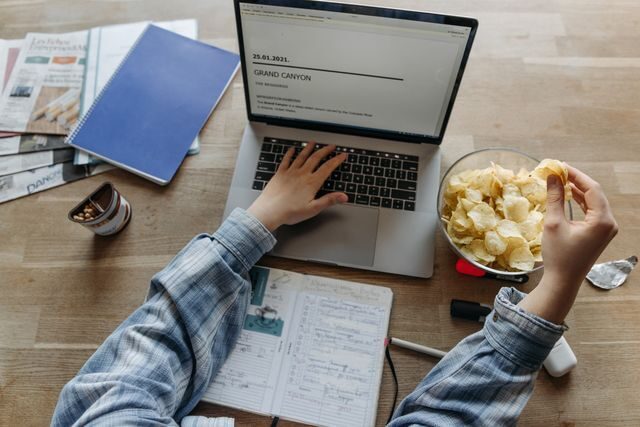
How repetition, routine, and “boring meals” quietly shaped my emotional life
I didn’t expect food to become noticeable again.
Not in the way it used to be—flavorful, social, something I actively looked forward to. But in the quieter sense. The kind of presence you only realize when it starts repeating itself in your life, almost like background music you forgot was playing.
It started subtly. I would cook the same thing for lunch. Then again for dinner. Then again, the next day.
At first, I didn’t think much of it. It felt practical. Efficient. Even responsible.
But after a while, I noticed something strange.
I wasn’t choosing food anymore. I was defaulting to it.
The Quiet Collapse of Variety
When I first started working from home, I thought I would eat better. More home-cooked meals. More intentional choices. Maybe even healthier habits.
And for a short time, that was true.
But as deadlines blurred into one another and days began to lose shape, food slowly stopped being an experience and became a checkpoint.
Breakfast before work. Lunch between tasks. Dinner when I realized the day was ending.
And somewhere in that routine, variety quietly disappeared.
Not because I lost interest in food—but because I lost the mental space to think about it.
The Comfort of Not Deciding
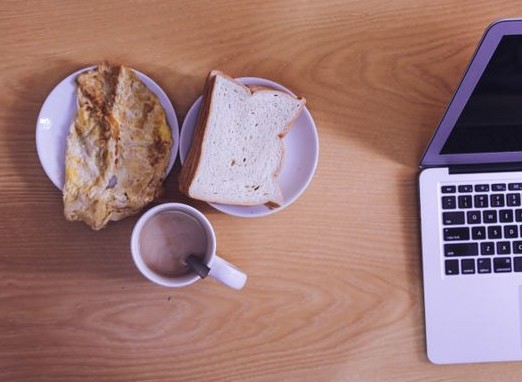
There is a kind of exhaustion that doesn’t look like tiredness.
It looks like small decisions becoming heavy.
“What should I eat?” sounds simple. Until it isn’t.
Because choosing requires energy. And when your mind is already occupied with writing, editing, revising, replying, thinking, sometimes, even deciding what to eat feels like one decision too many.
So you choose what is familiar.
Rice. Eggs. Something salty. Something predictable.
Not because it excites you.
But because it doesn’t ask anything from you.
Food As Emotional Background Noise
I used to think emotional eating meant reaching for comfort food in moments of stress.
But what I experienced was quieter than that.
It wasn’t indulgence. It was maintenance.
Food became something I moved through, not toward. It filled time. It marked transitions. It existed so I didn’t have to think too hard about the fact that I was still working, still sitting, still inside the same space I had been in for hours.
And in that sense, repetition wasn’t boring.
It was stabilizing.
When Meals Stop Being Meals
There were days I didn’t even remember eating.
Not because I skipped food, but because nothing about it stood out enough to be remembered.
That’s when I realized something had shifted.
Food had stopped being an event.
It had become infrastructure.
Like lighting. Or time. Or the sound of a fan running in the background.
Always there. Rarely noticed. But necessary.
The Strange Honesty of Repetitive Eating
At some point, I stopped judging myself for it.
Because I started to notice the pattern wasn’t random, it reflected everything else happening in my life.
When work felt overwhelming, my meals became simpler.
When my schedule felt uncertain, my food became repetitive.
When I felt mentally scattered, I gravitated toward whatever required the least effort to prepare and the least thought to consume.
It wasn’t a lack of discipline.
It was adaptation.
What “Boring Food” Actually Means
We tend to romanticize food. Variety, discovery, exploration. These are treated as signs of a good relationship with eating.
But repetition has its own language. It says:
“I need things to be steady right now.”
“I don’t have the capacity for complexity in this moment.”
“I’m conserving energy where I can.”
And maybe that’s what I didn’t understand before.
That eating the same meal over and over isn’t always about lack of choice.
Sometimes it’s about survival in a quieter sense. It’s the kind that happens in everyday life, not emergencies.
Final Thoughts
I still eat the same meals more often than I probably should, but I no longer see it as something to fix. I’ve come to understand that food, especially in repetitive patterns, often reflects something deeper than taste. It reflects capacity.
And in a life built around constant output, maybe simplicity is not a flaw. It could be a form of balance. I realized that not everything needs to be new to matter.
Sometimes, the most meaningful meals are the ones that quietly hold everything together while we figure out how to keep going.